
Croatia Schengen Visa – Essential Travel Guide and Requirements
Planning a trip to Croatia? As a Schengen member, a Schengen visa allows you to visit Croatia and 28 other European countries. Here’s a detailed guide to help you navigate the application process and requirements.
Why Visit Croatia?
Croatia offers stunning landscapes, historic sites, and beautiful coastlines along the Adriatic Sea:
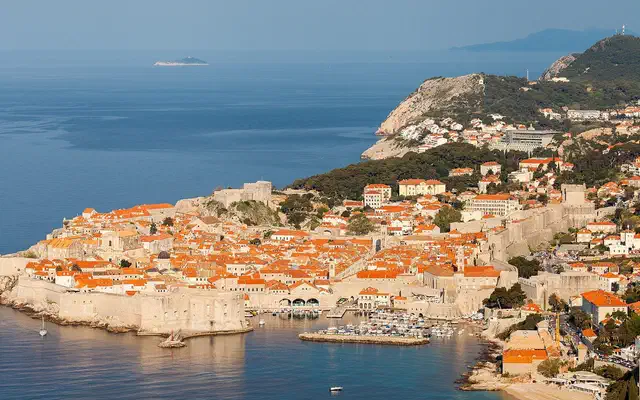
Tourism: Explore the ancient walls of Dubrovnik (opens in new tab), the picturesque coast of Split (opens in new tab), and the unique national parks, including Plitvice Lakes (opens in new tab).
Business: Croatia is an emerging business hub, particularly in tourism, IT, and trade, with international events held in cities like Zagreb and Rijeka.
Croatia Schengen Visa Requirements
To apply for a Croatia Schengen Visa, you’ll need:
- Visa Application Form:
Complete the application form online at CroVisa (opens in new tab).
The form must be signed by the applicant, or, in the case of minors, by a parent or legal guardian.
- Passport:
Issued within the last 10 years.
Valid for at least 3 months beyond the expiration date of the requested visa.
Contains at least two empty pages.
Include copies of all previous visas and used pages in both valid and expired passports.
One Photograph: A recent, passport-size photo in color with a white background. See detailed requirements at Schengen Photo Specifications (opens in new tab).
UK Residence Permit:
UK immigration status is now held as a UKVI eVisa. Physical Biometric Residence Permits (BRPs) expired on 31 December 2024 and are no longer valid. You will need to provide a share code from the UKVI online checking service — see proving your immigration status on GOV.UK (opens in new tab).
Must be valid for at least 1 month beyond the return date from Croatia.
C type visitor visa is not acceptable.
- Proof of Professional or Student Status:
For employees, a letter from employer or recent pay slips.
For students, a certificate of school attendance or proof of enrollment.
For retirees, a pension slip.
- Proof of Sufficient Financial Means:
€70 per day of the estimated stay in Croatia.
€30 per day if in possession of a paid tourist package or similar documentation.
Supporting documents may include pay slips, bank account statements showing balance and recent transactions for the last three months, pension slips, or proof of scholarship.
- Proof of Means of Transportation and Intention to Return:
Provide a reservation of a return travel ticket (airplane, bus, or boat).
If traveling by car, include the registration card and driver’s license.
If traveling onward to a third country, provide proof of itinerary (such as travel tickets).
Travel Health Insurance: Must show the applicant’s name, have coverage of at least €30,000, be valid in all Schengen countries, and cover the entire period of intended stay in the Schengen area. The insurance must be obtained from a company based in the United Kingdom or a Member State.
Proof of Purpose of Stay in Croatia:
- Letter of Guarantee by Legal Person: Original or copy if the original is deposited at the Ministry of Foreign and European Affairs in Croatia. The guarantor must provide proof of solvency (such as BON 1 or BON 2 Forms or a confirmation from the Commercial Court showing the business is not in liquidation). The applicant should receive a photocopy of the Letter of Guarantee for border control purposes.
Letter of Guarantee Form (opens in new tab)
Letter of Invitation: For business applications, provide a letter issued by a Croatian state authority or the organizer of an international meeting or event under the auspices of the Croatian Parliament, President, or Government.
Certificate of a paid tourist package.
Hotel or other accommodation booking.
Private accommodation booking (including a copy of the decision from the competent office in Croatia approving the rental).
Day-to-day itinerary with confirmed accommodation for the entire stay.
Proof of ownership or lease of a boat/yacht (if applicable).
- For Minors and Persons Deprived of Legal Capacity:
Birth certificate of the minor (if parents are legal guardians).
Decision of the competent body appointing the legal guardian.
If a minor is traveling without a parent/legal guardian, it is recommended to carry a notarized consent from the guardian. This should include the personal information of the parent/legal guardian, purpose of the visit, length of stay in Croatia, validity period, and the guardian’s signature.
- Additional Documentation and Translations:
The Croatian Embassy may request additional supporting documents, certified translations, or an apostille on certain documents as part of the visa application process.
All attached documents should not be older than three months.
When to Apply for a Croatia Schengen Visa
Submit your application at least 15 days before your intended travel date and no earlier than 6 months before departure. Early application helps avoid delays and ensures sufficient time for processing.
Croatia Visa Processing Time
Standard processing time is up to 15 days from receipt of the application at the Embassy (it may be shorter, depending on documentation).
Extended processing time: If documents are not submitted as per requirements or due to other factors, the processing time may be extended up to a maximum of 45 calendar days in individual cases.
Types of Visas for Visiting Croatia
The type of visa you need depends on the purpose of your trip:
- Short-Stay Visa (Type C):
Suitable for tourism and business visits, this common Schengen visa allows travel to Croatia and across all 29 Schengen countries for up to 90 days within any 180-day period from entry into the Schengen zone.
Croatia Schengen Visa Fees
A Schengen visa to Croatia comes with standard fees, as these are uniform across Schengen countries:
Consulate Fee: €90 for adults (collected as approximately GBP 70.95).
Children (Aged 6–11): €45.
Children Under 6: Free.
Visa Center Fee: £25.
Premium Lounge Fee: £80.
Please note that these fees are subject to change, and it’s advisable to confirm the current rates before applying.
Frequently asked questions
How long can I stay in Croatia with a Schengen visa?
Can I visit other Schengen countries with my Croatia visa?
How long does visa processing take?
Can I extend my Schengen visa in Croatia?
Is it possible to work in Croatia with a Schengen visa?
Can I study in Croatia on a Schengen visa?
A Schengen visa only allows short-term studies or training lasting less than 90 days. For longer study programs, you will need a student visa (opens in new tab).
If you want to apply with us, please start your application here.